Upper Delaware Brook Trout Initiative
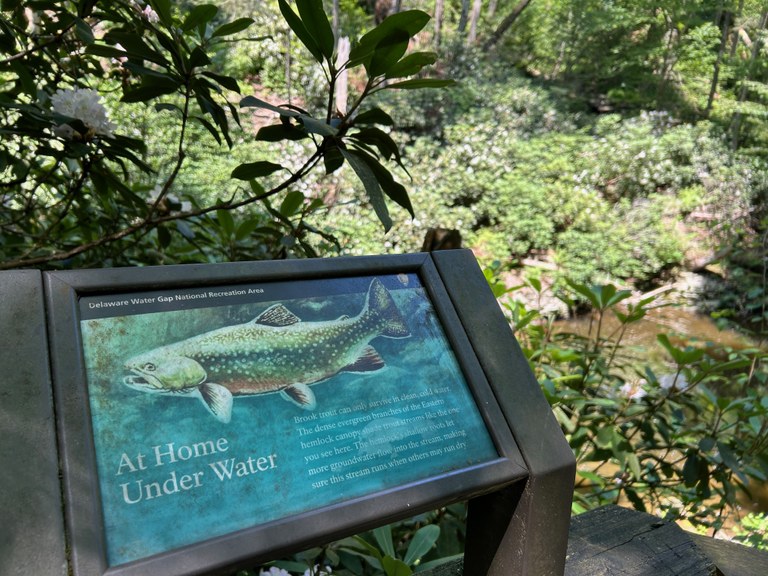
The Upper Delaware River watershed contains one of the largest remaining networks of connected wild brook trout habitat in the eastern United States. A new initiative brings together state and federal agencies, conservation organizations, local partners, researchers, and communities to protect and restore this remarkable coldwater landscape through coordinated science, planning, and on-the-ground conservation.
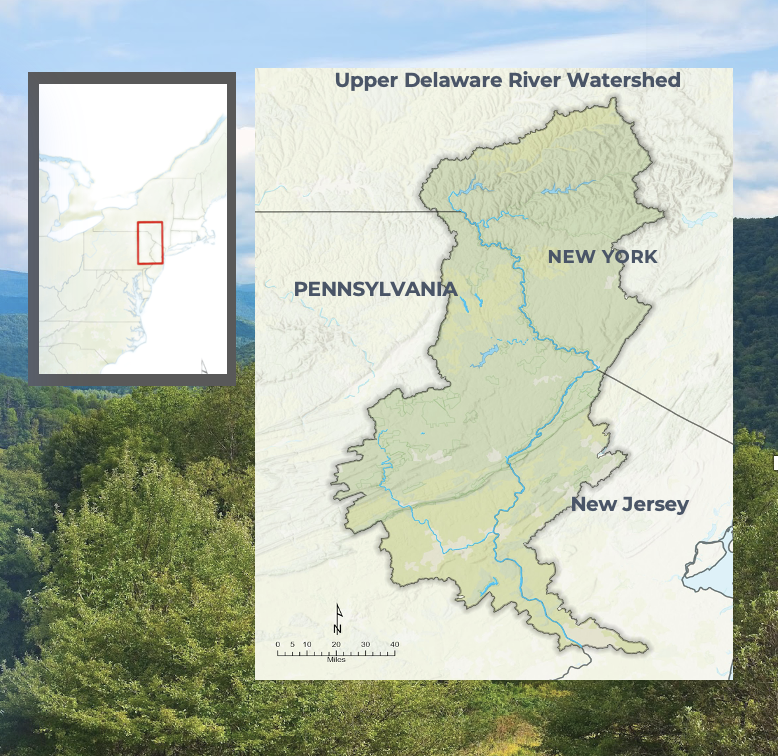
Conserving coldwater habitat across state boundaries
The Upper Delaware River watershed crosses state lines, but brook trout and the coldwater habitats they depend on do not.
The Upper Delaware Brook Trout Initiative brings together Pennsylvania, New York, and New Jersey state agencies, federal agencies, conservation organizations, and local partners to improve conditions for native brook trout across the watershed.
The Initiative combines landscape-scale priorities with local decision-making. Partners share a common conservation direction, while projects are developed and implemented by the people who know the watersheds, communities, and management needs on the ground.
One watershed • Three states • Multiple partners • A shared conservation goal
Why the Upper Delaware?
The Upper Delaware contains some of the most important remaining coldwater habitats in the region. Its forested tributaries support native brook trout, provide cold, clean water, and connect a network of aquatic and terrestrial habitats that extend well beyond individual state boundaries.
But managing these resources at the landscape scale is difficult. State agencies have different authorities, programs, funding structures, and priorities. Local organizations work at different scales. Federal programs have their own requirements.
These organizations already work together. We are now using those existing relationships differently to deliver conservation across boundaries.
The initiative provides a forum where partners can share science, coordinate priorities, leverage funding, and implement complementary conservation projects throughout the watershed.
How we're structured
Partners bring individual strengths and expertise to the table that no single agency can possess.
To start, we needed a sponsor. New Jersey DEP Fish & Wildlife serves as the recipient for major grant funding from the National Fish and Wildlife Foundation. Wildlife Management Institute provides fiscal and administrative oversight and contracting and deliver funding across three states.
We knew early on that we would need capacity in the form of project managers. NGOs, such as Trout Unlimited provide habitat enhancement prescriptions, permitting know-how and support habitat manager positions for implementation capacity. Local organizations, such as Friends of the Upper Delaware have the capacity to work at the local level, engaging municipalities and seizing upon opportunities. States provide biological data, surveying capability and fisheries management expertise, and retain their statutory authorities. EBTJV and Fire and Risk Alliance provide overall program coordination and oversight to ensure effective management, relationships, and communication between partners.
When combined, these individual strengths provide for synergistic efficiencies. Because this structure bridges many organizations, and will share multiple millions in conservation investment, a key component of success is communication and development of shared processes. Two distinct teams, a Technical Team and Administrative Team, each meet at least monthly to co-design program structure and processes and to learn from one another. The teams are moving from a shared regional vision to coordinated investment, project development, implementation, and monitoring.
What we are working on
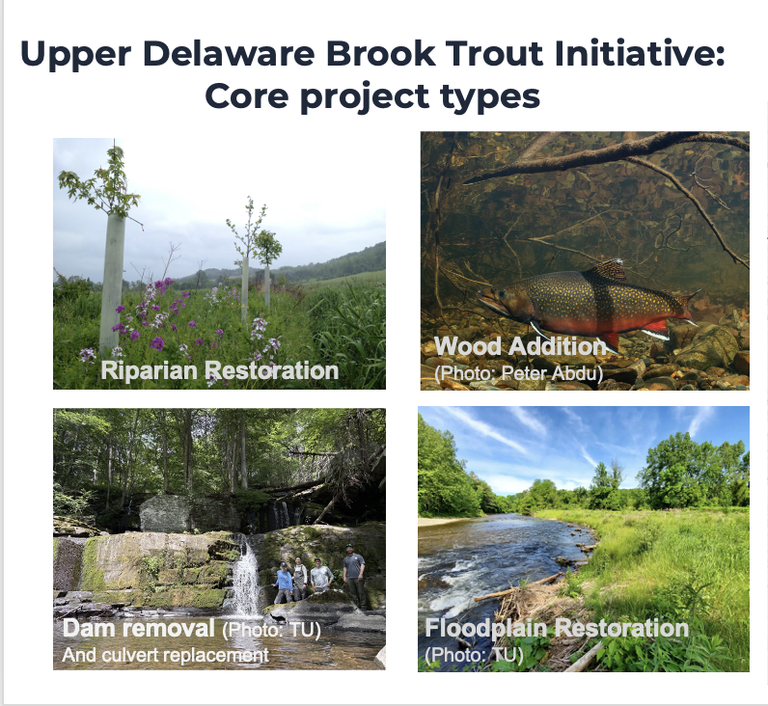
The Initiative is supporting work in several complementary areas:
Aquatic organism passage | Removing or replacing barriers such as dams and culverts to reconnect coldwater habitat and allow fish and other aquatic organisms to move through the stream network. Connectivity projects benefit local communities by reducing maintenance costs and flood risk of road-stream crossings. |
|---|---|
Riparian restoration |
Restoring streamside vegetation and canopy to reduce stream temperatures, stabilize banks, and improve stream habitat. |
Floodplain and stream restoration |
Improving degraded stream sections and reconnecting streams with their floodplains where those actions can benefit coldwater habitat and increase community flood safety. |
Instream habitat and wood |
Using strategic wood and other habitat improvements to increase habitat complexity, pools, cover, and organic matter retention. |
Fisheries management
|
Considering management actions—including changes in non-native trout management—where competition with native brook trout is an important limiting factor. This is not a project type, but rather an action that when completed allows us to document the true potential of habitat restoration to improve brook trout populations. |
The Initiative does not assume that every state or watershed needs the same thing.
Partners use existing science and tools—including the EBTJV assessment and Trout Unlimited's Conservation Portfolio—along with local knowledge and professional judgment to identify opportunities.
State and local partners help determine which projects make sense in their watersheds, while the Initiative provides a larger landscape context, coordination, and opportunities to learn from work happening elsewhere.
A partnership that learns as it works
One of the benefits of working across three states is the opportunity to learn from projects that would otherwise be isolated within individual programs.
Partners regularly come back together to share project updates, discuss challenges, compare approaches, and identify opportunities to coordinate work.
The projects underway today are the beginning points. Over time, those individual projects can build toward connected habitat improvements within watersheds—and, ultimately, toward a larger network of conservation actions across the Upper Delaware.
Why This Matters Beyond Brook Trout
Brook trout are indicators of healthy coldwater ecosystems. Conservation actions that benefit brook trout also improve water quality, reconnect rivers, reduce flood risk, increase climate resilience, and support a wide variety of aquatic species and local communities. But looking at this from the perspective of the new network's relationships reveals something else: we can do this in other places, for other species and other ecosystems. The fiscal model developed here solves a barrier nearly every multi-state effort faces. Whether other agencies can adopt a similar model will depend on unique circumstances and trusted relationships.
The partnership
The Upper Delaware Initiative brings together organizations with different authorities, expertise, and roles.
State fish and wildlife agencies |
Pennsylvania Fish and Boat Commission • New York State Department of Environmental Conservation • New Jersey Fish & Wildlife |
|---|---|
Regional conservation partners and funders |
Eastern Brook Trout Joint Venture • Trout Unlimited • Wildlife Management Institute • Northeast Association of Fish and Wildlife Agencies •Fire and Risk Alliance • National Fish Habitat Partnership • National Fish and Wildlife Foundation |
Federal partners |
U.S. Fish and Wildlife Service • USFWS Partners for Fish and Wildlife Program |
Implementation and local partners |
Friends of the Upper Delaware River • Musconetcong Watershed Association • conservation districts • municipalities and townships • other local partners |
Our progress so far
| Target | Progress | Item |
|---|---|---|
| 1 | 1 | Watershed |
| 3 | 3 | States |
| 10 | 10 | Partner organizations working together |
| 30 | Miles of stream habitat evaluated or restored | |
| 24,000 | 227 | People reached |
| 42 | Partner meetings | |
| 29 | Project opportunities added to inventory | |
| 1 | Monitoring program developed |
Funding
The initiative has received significant support from partners including the National Fish and Wildlife Foundation to increase regional coordination, planning, and implementation.
If you would like to support this initiative, stay tuned to opportunities through the National Fish Habitat Fund.
America's Ecosystem Restoration Initiative funded "Enhancing Cold Water Conservation for Brook Trout Across Pennsylvania, New Jersey, and New York" grant number 5200.25.084418 to the New Jersey Department of Environmental Conservation, Fish and Wildlife, and administered by the Wildlife Management Institute.
Delaware Watershed Conservation Fund funded "Building Capacity for a Collaborative Landscape Approach to Coldwater Habitat Conservation in the Delaware River Watershed" to the Wildlife Management Institute, grant ID NFWF 2024-01.
The views and conclusions contained in this document are those of the authors and should not be interpreted as representing the opinions or policies of the U.S. Government or the National Fish and Wildlife Foundation and its funding sources. Mention of trade names or commercial products does not constitute their endorsement by the U.S. Government, or the National Fish and Wildlife Foundation or its funding sources.
Supporting Science & Assessment
- EBTJV Brook Trout Assessment
- Trout Unlimited Eastern Conservation Portfolio
- National Aquatic Connectivity Collaborative
- Monitoring framework (under development)
- Project selection framework
- Technical reports
- Other data
In the News
WHYY-Philadelphia reporting with Trout Unlimited December 2024
NJ DEP Press release - January 8, 2025.
Philadelphia Inquirer - N.J., Pa., N.Y. join forces to protect dwindling brook trout January 9, 2025
EBTJV, PA, NY, NJ, TU, and WMI partner to increase capacity for brook trout conservation - EBTJV, Sept 2024
Document Actions